

Clients with low vision face higher risks of falls, medication errors, and household accidents at home. Home care agencies can improve safety through better lighting, contrast-based modifications, caregiver training, and supportive technology to help clients stay independent and confident.
Overview
Low Vision Awareness Month is the perfect time for home care agencies to spotlight the unique challenges faced by individuals living with vision impairment — and the critical role caregivers play in keeping them safe, confident, and independent at home.
According to the National Eye Institute, low vision affects millions of Americans. Conditions like macular degeneration, glaucoma, diabetic retinopathy, and cataracts can significantly limit a person’s ability to see clearly, even with glasses or contact lenses. For home care agencies, understanding how to support clients with vision problems is essential for reducing fall risks, medication errors, and emotional distress.
Here’s how agencies can promote safety, dignity, and quality of life for clients with low vision.

What Is Low Vision?
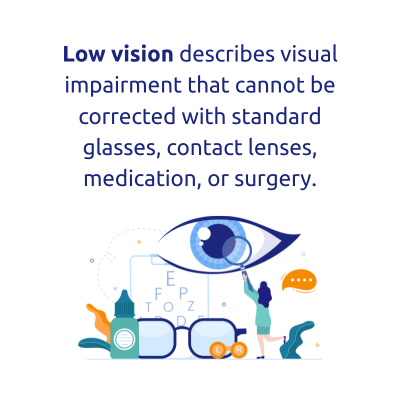
Low vision can mean a lot of things but according to the National Eye Institute, describes a visual impairment that cannot be fully corrected with standard glasses, contact lenses, medication, or surgery. It can include:
Blurred or hazy vision
Loss of central or peripheral vision
Difficulty seeing in low light
Sensitivity to glare
Trouble recognizing faces or reading small print
The Centers for Disease Control and Prevention (CDC) reports that for older adults receiving home care, low vision can turn everyday tasks into safety hazards — from walking down a hallway to preparing a meal.
Why Vision Loss Increases Safety Risks at Home
Clients with vision impairment face a higher risk of:

Falls and Injuries
Poor depth perception and reduced contrast sensitivity make it harder to see stairs, rugs, cords, and changes in flooring. Falls are already a leading cause of injury among seniors, and vision loss significantly increases that risk.

Medication Mistakes
Reading pill bottles, distinguishing between medications, or seeing dosage instructions can be extremely difficult. This raises the risk of missed doses or accidental double-dosing.

Household Accidents
Low vision can make it harder to see stove flames, sharp objects, spills on the floor, or water running in a sink — all of which can lead to burns, cuts, or slips.

Emotional and Cognitive Strain
Vision loss can lead to anxiety, social withdrawal, depression, and reduced confidence. Clients may avoid moving around their homes, increasing isolation and dependence.
Home care agencies that proactively address these risks improve the safety and overall well-being of their patients.
How Home Care Agencies Can Improve Safety for Clients with Low Vision
1. Conduct Vision-Specific Home Safety Assessments
A general home safety check isn’t enough. Agencies should train caregivers to look at the home through the lens of someone with limited vision.

Key areas to assess:
Lighting: Ensure bright, evenly lit hallways, staircases, bathrooms, and kitchens
Glare reduction: Use lampshades and blinds to reduce harsh reflections
Clear pathways: Remove clutter, cords, and small furniture from walkways
Flooring: Secure loose rugs and mark changes in floor height with high-contrast tape
Stairs: Add high-contrast strips on stair edges and sturdy handrails on both sides
Documenting and addressing these hazards with home care EMR tools that improve patient safety can significantly reduce fall risk and enhance overall safety.
2. Use Contrast to Make the Home Easier to Navigate
Contrast is crucial for people with low vision. Home care agencies can guide families on simple modifications that make a big difference.

Examples include:
Dark toilet seats on light-colored toilets
Light switches in a contrasting color to the wall
Brightly colored tape on the edges of countertops or steps
Plates that contrast with the table and the food (e.g., dark plate for light-colored foods)
These small adjustments support independence with daily tasks like eating, grooming, and moving around the home, and can be further enhanced with occupational therapy interventions that support seniors with low vision.
3. Support Safe Medication Management
Medication management is one of the most important safety services home care agencies provide to clients with vision impairment.

Caregivers can help by:
Organizing medications in clearly labeled pill organizers
Using large-print labels when possible
Reading medication instructions aloud
Setting up reminder systems (alarms, phone alerts, or caregiver prompts)
Double-checking dosages before administration (if within scope of care)
Agencies should also encourage families to ask pharmacies about talking prescription labels or large-print instructions, leveraging electronic medication administration (eMAR) for safer dosing and following best practices for effective medication management in home health.
4. Improve Kitchen and Meal Safety
The kitchen can be especially dangerous for someone with low vision. Caregivers should be trained to create a safer cooking and dining environment.

Safety tips include:
Keeping frequently used items in consistent, easy-to-reach locations
Using tactile markers on appliances (like raised dots on stove dials)
Ensuring good lighting over counters and the stove
Cleaning up spills immediately
Assisting with cutting food and checking expiration dates
Even clients who no longer cook independently benefit from safe meal setup and clear, clutter-free dining spaces. Scheduling consistency can help, using caregiver scheduling software that reduces missed visits to ensure caregivers are always available when needed.
5. Encourage Use of Low Vision Aids and Technology
Modern tools can dramatically improve safety and independence for people with vision loss.

Home care agencies can educate families about:
Magnifiers and large-print reading materials
Talking clocks and watches
Voice-activated assistants for reminders and communication
Large-button phones and remote controls
Screen readers and accessibility features on smartphones and tablets
Caregivers can help clients learn to use these devices and incorporate them into daily routines while improving accountability with EVV tools that ensure compliant and verified home care visits.
6. Provide Emotional Support and Build Confidence
Vision loss is not just a physical challenge — it’s an emotional one. Clients may feel frustrated, embarrassed, or afraid of losing independence.

Caregivers can make a powerful difference by:
Offering encouragement and patience
Allowing extra time for tasks instead of rushing
Clearly explaining what they are doing before assisting
Respecting the client’s desire to do tasks independently when safe
Encouraging social interaction and hobbies adapted for low vision
Agencies that train caregivers in empathetic communication help reduce isolation and improve mental health outcomes, supporting building trust with family caregivers during vulnerable care needs and improving care team communication for better client confidence.
Finally, combining all these strategies — home safety assessments, caregiver training, medication management, and assistive technology — works best when powered by an integrated home care software that supports safety, documentation, and compliance. This approach ensures consistency, reduces errors, and enhances both caregiver and client confidence at home.
Training Caregivers for Vision Loss Support
Low Vision Awareness Month is a great time for home care agencies to provide specialized training on:
Sighted guide techniques (how to safely guide a person with vision loss)
Fall prevention strategies
Recognizing signs that vision is worsening
Communicating clearly and respectfully
Proper lighting and environmental adjustments
Well-trained caregivers feel more confident, and clients feel safer and more supported.
Raising Awareness During Low Vision Awareness Month
Home care agencies can also use this month to educate their communities by:
Sharing vision safety tips on social media
Sending newsletters to families about fall prevention for clients with low vision
Partnering with local ophthalmologists or low vision specialists
Hosting virtual workshops on home safety for visually impaired seniors
Positioning your agency as a trusted resource for vision-related care builds credibility and strengthens referral relationships.
Helping Clients See a Safer Future at Home
Low vision doesn’t have to mean loss of independence. With the right home modifications, caregiver training, and supportive technology, home care agencies can dramatically reduce risks and improve quality of life for clients with vision impairment.
Low Vision Awareness Month is a reminder that safety starts with awareness — and that compassionate, informed home care can help clients navigate their homes and their lives with greater confidence every day.
Frequently Asked Questions
-
Low vision is a visual impairment that cannot be fully corrected with glasses, contact lenses, medication, or surgery. It can affect daily activities like reading, walking safely, or recognizing faces.
-
Low vision makes it harder to see hazards such as stairs, rugs, poor lighting, or clutter, increasing the risk of falls, injuries, and household accidents for older adults aging in place.
-
Common causes of low vision include macular degeneration, glaucoma, diabetic retinopathy, and cataracts, all of which can reduce clarity, contrast, and depth perception over time.
-
Home care agencies can improve safety by conducting vision-specific home assessments, reducing fall hazards, supporting medication management, improving lighting, and training caregivers in low vision support strategies.
-
Helpful modifications include brighter lighting, removing clutter, securing rugs, adding high-contrast tape on stairs, installing handrails, and using contrasting colors to make key areas easier to see.
-
Caregivers can use pill organizers, large-print labels, reminder systems, and verbal instruction to prevent missed doses, double-dosing, or confusion between medications.
-
Low vision aids include magnifiers, talking clocks, voice-activated assistants, large-button phones, screen readers, and accessibility features on smartphones and tablets.
-
Low vision can make it difficult to see stove flames, sharp utensils, spills, or expiration labels, increasing the risk of burns, cuts, and slips. Caregiver support and consistent organization improve safety.
-
Vision loss can lead to anxiety, depression, social withdrawal, and reduced confidence. Emotional support from caregivers helps clients maintain dignity, independence, and quality of life.
-
Caregivers should be trained in fall prevention, proper lighting adjustments, sighted guide techniques, respectful communication, and recognizing signs of worsening vision.
About CareVoyant
CareVoyant is a leading provider of cloud-based integrated enterprise-scale home health care software that can support all home-based services under ONE Software, ONE Patient, and ONE Employee, making it a Single System of Record. We support all home based services, including Home Care, Private Duty Nursing, Private Duty Non-Medical, Home and Community Based Services (HCBS), Home Health, Pediatric Home Care, and Outpatient Therapy at Home.
CareVoyant functions – Intake, Authorization Management, Scheduling, Clinical with Mobile options, eMAR/eTAR, Electronic Visit Verification (EVV), Billing/AR, Secure Messaging, Notification, Reporting, and Dashboards – streamline workflow, meet regulatory requirements, improve quality of care, optimize reimbursement, improve operational efficiency and agency bottom line.
For more information, please visit CareVoyant.com or call us at 1-888-463-6797.
Request for Information
To learn more about CareVoyant Software and how we improve the operational efficiency of Home Healthcare Agencies, contact us:
