

Private Duty Nursing Software streamlines wound care documentation with real-time charting, standardized templates, photo capture, and user-defined protocols to improve accuracy, compliance, and patient outcomes. It replaces manual, fragmented notes with secure, efficient, and clinically aligned digital workflows.
Introduction
In Private Duty Nursing (PDN) home care every detail matters, especially when caring for medically fragile adults and pediatric patients who depend on one-on-one skilled nursing. Among the many aspects of care, accurate wound care documentation stands out as a vital component for ensuring patient safety, promoting healing, and maintaining regulatory compliance supported by the NLM overview of evidence-based wound care.
Yet many agencies still rely on fragmented notes, inconsistent assessments, and manual processes that lead to errors, compliance risks, and poor continuity of care. As the demand for home-based clinical care grows, mobile apps integrated with private duty nursing software are transforming how private duty nurses document wound care. With real-time access to data, image capture tools, and seamless integration with home care software, nurses can now document faster, more accurately, and more securely than ever before.
The Challenges of Traditional Wound Care Documentation
Traditional wound care documentation has long been a pain point for private duty nurses. Paper-based notes, manual charting, and delayed updates create several challenges:
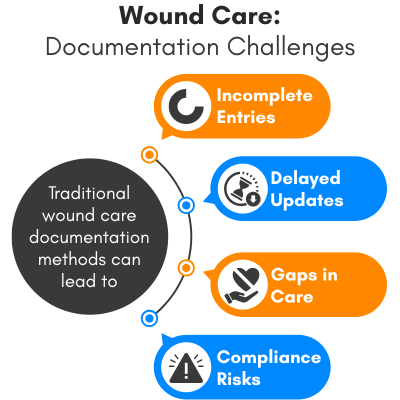
Incomplete or illegible entries: Handwritten notes can be difficult to interpret and prone to missing details.
Delayed updates: Documentation performed hours after wound care may omit critical observations or measurements.
Communication gaps: Paper records make it harder to share wound status with multidisciplinary teams in real time.
Compliance risks: Manual documentation can lead to inconsistent data entry, increasing the risk of deficiencies during audits or payer reviews.
These challenges can ultimately compromise care continuity, delay treatment adjustments, and even result in denied claims or compliance citations as supported by NIH research on chronic wound management.
How Private Duty Nursing Software Transforms Wound Care Documentation
Technology has transformed wound care documentation in home care, bringing structure, accuracy, and efficiency to every stage of the care process. CareVoyant Private Duty Nursing Software enables clinicians to document wounds in real time, track healing progress, and ensure compliance with agency and payer requirements.
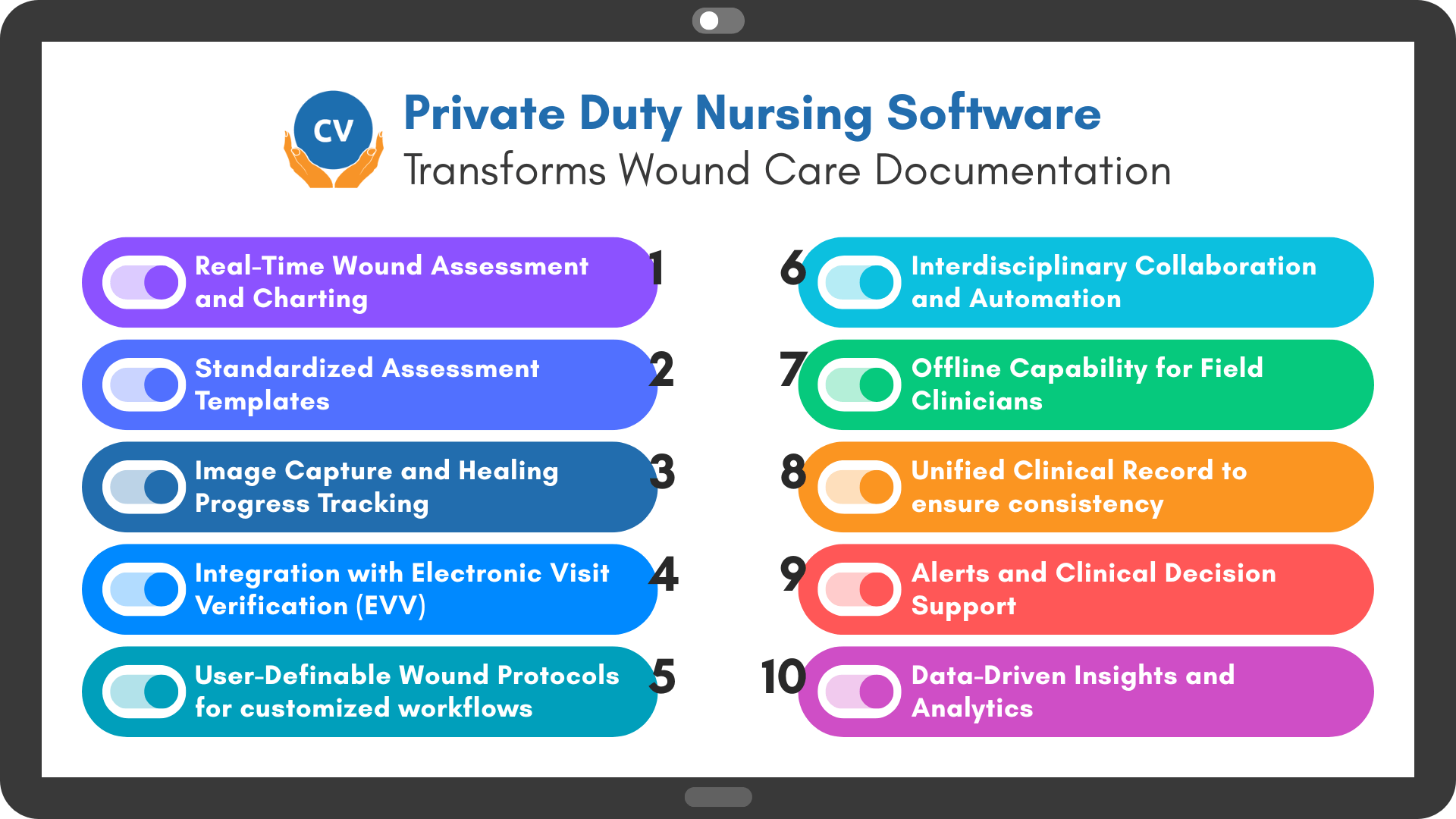
1. Real-Time Wound Assessment and Charting

Clinicians can document wound details such as size, stage, exudate, and surrounding skin condition directly at the point of care. Using mobile devices or tablets, they can capture accurate data without returning to the office, ensuring accurate and complete documentation.
2. Standardized Assessment Templates

Built-in templates ensure consistent wound assessments across the agency. By standardizing terminology and measurement fields, Private Duty Nursing Software minimizes errors and helps clinicians adhere to clinical best practices and Medicare guidelines.
3. Image Capture and Healing Progress Tracking

Integrated photo documentation allows clinicians to capture and compare wound images over time. This visual record improves communication among team members, supports clinical decision-making, and provides compelling evidence for audits or quality reviews.
4. Integration with Electronic Visit Verification (EVV)

When wound care documentation is linked with EVV, visit details are automatically verified and time stamped. This integration enhances compliance, ensures accurate billing, and streamlines administrative workflows.
5. User-Definable Wound Protocols

One of the most powerful features in CareVoyant Private Duty Nursing Software is user-definable wound care protocols. Agencies can create customized workflows and treatment guidelines based on wound type, severity, or patient needs. This flexibility ensures clinicians follow consistent, agency-approved care plans while allowing for personalized interventions when required.
6. Interdisciplinary Collaboration and Automation

Integrated messaging and task automation features help nurses, therapists, and physicians stay aligned. Automated reminders prompt follow-ups, dressing changes, or re-assessments, reducing missed steps and improving care continuity.
7. Offline Capability for Field Clinicians

With offline data capture, caregivers can document wound assessments, capture images, and record vital signs in the field, then sync data once reconnected. This ensures no documentation gaps due to connectivity issues.
8. Unified Clinical Record
All wound documentation flows into a single patient chart, connecting assessments, orders, progress notes, and outcomes. This unified view enables clinicians and supervisors to collaborate effectively and ensures consistency across the care team.
9. Alerts and Clinical Decision Support

Built-in alerts and configurable rules can notify clinicians of overdue wound reassessments or dressing changes, helping prevent oversights and supporting better compliance.
10. Data-Driven Insights and Analytics

Advanced reporting tools help agencies analyze healing trends, identify high-risk patients, and evaluate treatment effectiveness. Data-driven insights guide evidence-based care planning and improve patient outcomes.
By adopting technology-driven wound documentation with customizable protocols, home health agencies can strengthen compliance, improve healing outcomes, and enhance care quality, while reducing administrative workload.
Ensuring Compliance and Data Security
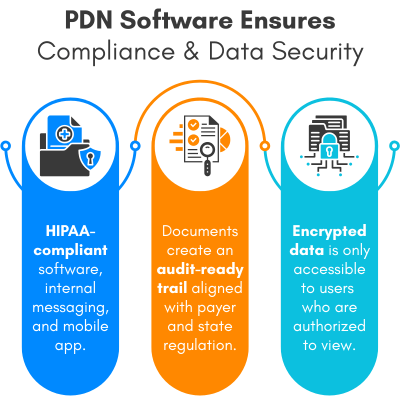
Wound care documentation involves highly sensitive health information, making data protection and regulatory compliance critical.
Mobile apps and private duty nursing software are HIPAA-compliant, keeping photos, notes, and updates encrypted and accessible only to authorized users.
Electronic documentation creates an audit-ready trail, supporting compliance with CMS guidelines for wound care documentation, Medicaid, and state-level PDN regulations. Agencies can align documentation with payer requirements, reducing the risk of survey deficiencies or denied claims.
Conclusion
Accurate and timely wound care documentation is essential to ensuring high-quality care in Private Duty Nursing. While manual methods often introduce delays and errors, mobile apps integrated with private duty nursing software empower nurses to document in real time, capture visual progress, and collaborate seamlessly with the care team. This will also enhance compliance, optimize reimbursement, and deliver safer, more effective wound care at home for the PDN agencies.
Frequently Asked Questions
-
Private duty nursing software improves wound care documentation by enabling real-time charting, standardized assessments, photo capture, and automated compliance tracking, resulting in more accurate and timely clinical records.
-
Real-time wound documentation ensures accurate assessments at the point of care, reduces missed details, improves clinical decision-making, and supports timely treatment adjustments for medically fragile patients.
-
Key features include standardized wound templates, image capture, EVV integration, user-defined protocols, offline documentation, alerts, and secure, unified patient records.
-
Photo documentation allows clinicians to visually track healing progress over time, improve interdisciplinary communication, support clinical decisions, and provide audit-ready evidence for payers and regulators.
-
Yes. Private duty nursing software supports compliance by standardizing documentation, time-stamping visits through EVV, creating audit trails, and aligning records with CMS, Medicaid, and state PDN requirements.
-
EVV integration verifies visit time and location while linking wound care notes to confirmed visits, improving billing accuracy, reducing compliance risks, and streamlining administrative workflows.
-
User-definable wound care protocols allow agencies to create customized workflows and treatment guidelines based on wound type, severity, or patient needs, ensuring consistent and agency-approved care.
-
Yes. Offline capability allows nurses to document wound assessments, capture photos, and record notes without connectivity, syncing data securely once they are back online.
-
Integrated messaging, shared clinical records, and automated alerts keep nurses, physicians, and care teams aligned on wound status, follow-ups, and treatment changes in real time.
-
By combining real-time documentation, visual tracking, alerts, and data-driven insights, private duty nursing software enables proactive care, reduces missed interventions, and supports evidence-based wound management.
About CareVoyant
CareVoyant is a leading provider of cloud-based integrated enterprise-scale home health care software that can support all home-based services under ONE Software, ONE Patient, and ONE Employee, making it a Single System of Record. We support all home based services, including Home Care, Private Duty Nursing, Private Duty Non-Medical, Home and Community Based Services (HCBS), Home Health, Pediatric Home Care, and Outpatient Therapy at Home.
CareVoyant functions – Intake, Authorization Management, Scheduling, Clinical with Mobile options, eMAR/eTAR, Electronic Visit Verification (EVV), Billing/AR, Secure Messaging, Notification, Reporting, and Dashboards – streamline workflow, meet regulatory requirements, improve quality of care, optimize reimbursement, improve operational efficiency and agency bottom line.
For more information, please visit CareVoyant.com or call us at 1-888-463-6797.
Request for Information
To learn more about CareVoyant Software and how we improve the operational efficiency of Home Healthcare Agencies, contact us:
