

Simple safety practices like fall prevention, medication management, infection control, and clear communication can significantly reduce risks in home care. By combining caregiver training with the right technology, agencies can improve patient safety while supporting independence at home.
Overview
Patient Safety Awareness Month is an important reminder for home care agencies to prioritize patient safety in the home. While hospitals and healthcare facilities receive the most attention when discussing patient safety protocols, millions of patients receive care in their homes — where safety risks are a greater concern. The importance of patient safety in healthcare has been widely emphasized by global organizations such as the WHO, especially as care increasingly shifts to home-based settings.
For home care agencies, this month presents the perfect opportunity to educate caregivers, review safety protocols, and implement proven home care safety practices that protect clients while supporting independence at home.
Because every home environment is unique, caregivers must be prepared to identify hazards, prevent injuries, and respond quickly to emergencies. By following these home care safety practices, home care aides and caregivers can significantly reduce risks and improve overall patient outcomes.

Why Home Care Safety Matters for Patient Care
Unlike controlled clinical environments, private homes contain potential safety hazards such as uneven flooring, cluttered walkways, poor lighting, and unsafe bathroom setups. These hazards can pose serious risks, particularly for individuals with limited mobility.
Beyond addressing environmental safety hazards, following proper home care safety practices helps agencies:
Avoid medication errors
Prevent infections
Improve caregiver response during emergencies
Strengthen trust with patients and families
Implementing strong safety practices allows patients to remain comfortable and independent in their homes while receiving high-quality care.
Top 5 Home Care Safety Tips for Caregivers and Home Health Aides
Home care aides play a crucial role in identifying risks and ensuring clients remain safe. The following home care safety tips can help caregivers create a safer environment for patients.
1. Conduct Vision-Specific Home Safety Assessments
One of the most important home care safety practices involves preventing falls. Falls are a leading cause of injury among older adults and can cause hospitalization or long-term health complications. According to the fall prevention strategies for older adults from the CDC, many of these incidents can be avoided with simple environmental modifications.

Caregivers can reduce fall risks by:
Removing clutter from hallways and walking paths
Securing or removing loose rugs
Ensuring adequate lighting in bedrooms, hallways, and staircases
Encouraging the use of walkers, canes, or other assistive devices
Monitoring patients during transfers or mobility activities
A simple home safety assessment can help caregivers identify and correct fall hazards. Additional strategies, such as home care safety tips for patients with low vision, can further reduce fall risks.
2. Follow Medication Best Practices
Medication management is another critical area where standardized home care safety practices can make a major difference. Many home care clients take multiple medications, which increases the risk of missed doses or incorrect administration. Following medication safety best practices in home care can significantly reduce the risk of missed doses and adverse drug interactions.

Caregivers should:
Follow the patient’s medication schedule carefully
Double-check medication labels and instructions
Observe patients for side effects or adverse reactions
Report concerns to supervisors or nurses
Ensure medications are stored and organized safely
Clear communication and electronic documentation are essential for maintaining medication safety.
3. Practice Proper Infection Prevention
Infection prevention is one of the most essential home care safety practices, particularly for clients with chronic illnesses, wounds, or weakened immune systems.

Caregivers can prevent infections by:
Washing hands before and after every care task
Wearing gloves or protective equipment when required
Cleaning frequently touched surfaces
Following wound care protocols carefully
Monitoring for signs of infection such as fever, redness, or swelling
Consistent infection control practices help protect both patients and caregivers in the home setting.
4. Use Safe Mobility and Transfer Techniques
Helping patients move safely is another important aspect of home care. Improper lifting or transfer techniques can lead to injuries for both caregivers and clients.
Important home care safety practices for transfers include:
Using proper body mechanics when assisting patients
Utilizing transfer belts or mobility aids when needed
Checking patient stability before movement
Asking for assistance when required
Following the patient’s care plan instructions
Training caregivers on safe mobility techniques helps reduce falls and workplace injuries.
5. Be Prepared for Emergencies
Caregivers must be ready to respond quickly if a patient experiences a medical emergency at home. Being prepared is one of the most important home care safety practices agencies can provide.

Caregivers should:
Know the client’s medical history and conditions
Understand agency emergency protocols
Keep emergency contact numbers readily available
Recognize signs of stroke, breathing problems, or sudden illness
Report emergencies immediately according to agency procedures
Prepared caregivers are better able to make critical decisions that protect patient health and safety.
Communication: A Critical Component of Home Care Safety
Strong communication between caregivers, supervisors, clinicians, physicians, and family members is essential for maintaining patient safety.
When agencies establish clear communication processes, caregivers can:
Quickly report changes in patient condition
Document safety concerns in real time
Electronically receive updated care instructions
Coordinate with other members of the care team
Integrated home care software can ensure potential issues are addressed before they escalate into safety incidents. Agencies focused on improving care team communication in home care can identify risks earlier and prevent safety incidents.
How Home Care Software Supports Patient Safety
Technology is becoming an essential tool for implementing effective home care safety practices across an agency.
CareVoyant can help agencies improve safety through:
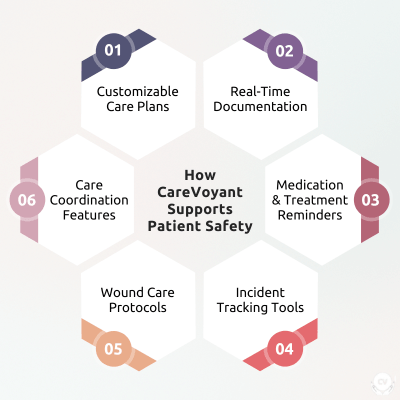
Customizable care plans that caregivers can access and update at the point of care
Real-time documentation for assessing and reporting safety concerns
Medication and treatment reminders to prevent medication errors
Incident tracking tools to monitor and analyze safety events
Wound care protocols to track progress and infection risk
Care coordination features that improve communication processes
When agencies combine caregiver training with integrated home care software, they create a stronger safety framework that benefits both patients and staff. Agencies can further strengthen outcomes by understanding how home care EMR software improves patient safety through real-time documentation and care coordination.
Building a Culture of Safety in Home Care
Patient Safety Awareness Month is a great time for agencies to strengthen their internal safety culture.
Home care agencies can reinforce safety by:
Providing ongoing caregiver training
Conducting routine home safety assessments
Encouraging open reporting of safety concerns
Using data to identify trends and risks
Providing caregivers with tools and support
By following practical home care safety tips, caregivers can identify hazards, prevent injuries, and respond effectively to emergencies. Applying these safety practices also aligns with ways to improve home care patient satisfaction and outcomes.
For home care agencies, investing in caregiver training, communication systems, and supportive technology ensures that patients can live safely, comfortably, and independently at home.
Frequently Asked Questions About Home Care Safety Tips
-
Some of the most important home care safety tips include preventing falls, managing medications correctly, practicing infection control, using safe mobility and transfer techniques, and being prepared for emergencies. Caregivers should also regularly assess the home environment for hazards such as cluttered walkways, poor lighting, or loose rugs that could lead to injuries.
By following these safety practices, caregivers can help ensure clients remain safe and comfortable in their homes.
-
Older adults are more vulnerable to injuries, falls, and medical complications. Implementing effective home care safety tips helps reduce these risks by addressing environmental hazards and ensuring caregivers follow proper care protocols.
Safety practices also allow seniors to maintain independence while receiving the support they need at home.
-
Fall prevention is one of the most important home care safety tips for caregivers. Caregivers can help prevent falls by:
Removing clutter and tripping hazards
Securing or removing loose rugs
Improving lighting throughout the home
Assisting with mobility when necessary
Encouraging the use of walkers, canes, or grab bars
Monitoring patients during transfers
Regular home safety assessments can significantly reduce fall risks.
-
Home care agencies play a critical role in ensuring caregivers follow proper home care safety tips and best practices. Agencies typically provide:
Safety training for caregivers
Clear care plans and documentation procedures
Incident reporting systems
Emergency response protocols
Ongoing supervision and support
Agencies that prioritize safety help protect both patients and caregivers.
-
Home care technology helps agencies implement home care safety tips more effectively by improving communication, documentation, and care coordination.
Many home care software platforms provide:
Digital care plans accessible to caregivers
Medication reminders
Real-time visit documentation
Incident reporting tools
Communication systems between caregivers and supervisors
These tools help agencies monitor patient safety and address issues quickly.
-
Caregivers should conduct a basic home safety check during every visit. While major safety assessments may occur during care plan updates, routine observations help caregivers identify new hazards such as clutter, spills, poor lighting, or mobility challenges.
Consistently applying home care safety tips during each visit helps prevent accidents before they occur.
-
If caregivers identify a safety hazard, they should take immediate steps to reduce the risk when possible and report the issue to their supervisor or care coordinator. Documentation is important so the care team can address the concern and update the patient’s care plan if necessary.
Quick action helps ensure patient safety and prevents future incidents.
About CareVoyant
CareVoyant is a leading provider of cloud-based integrated enterprise-scale home health care software that can support all home-based services under ONE Software, ONE Patient, and ONE Employee, making it a Single System of Record. We support all home based services, including Home Care, Private Duty Nursing, Private Duty Non-Medical, Home and Community Based Services (HCBS), Home Health, Pediatric Home Care, and Outpatient Therapy at Home.
CareVoyant functions – Intake, Authorization Management, Scheduling, Clinical with Mobile options, eMAR/eTAR, Electronic Visit Verification (EVV), Billing/AR, Secure Messaging, Notification, Reporting, and Dashboards – streamline workflow, meet regulatory requirements, improve quality of care, optimize reimbursement, improve operational efficiency and agency bottom line.
For more information, please visit CareVoyant.com or call us at 1-888-463-6797.
Request for Information
To learn more about CareVoyant Software and how we improve the operational efficiency of Home Healthcare Agencies, contact us:
