

Addressing senior women’s unique health risks including heart health, fall prevention, and cognitive decline. Using integrated home care software to streamline documentation and ensure safer, more coordinated aging in place.
Women’s Health Awareness Month: Why It Matters in Home-Based Care
Women’s Health Awareness Month is an opportunity for home care agencies to focus on the unique health needs of female patients—particularly senior women receiving care at home.
Women often face distinct health challenges that require specialized attention as they age. From chronic disease management and mobility concerns to cognitive health and emotional well-being, senior women frequently need coordinated, personalized care that evolves over time.
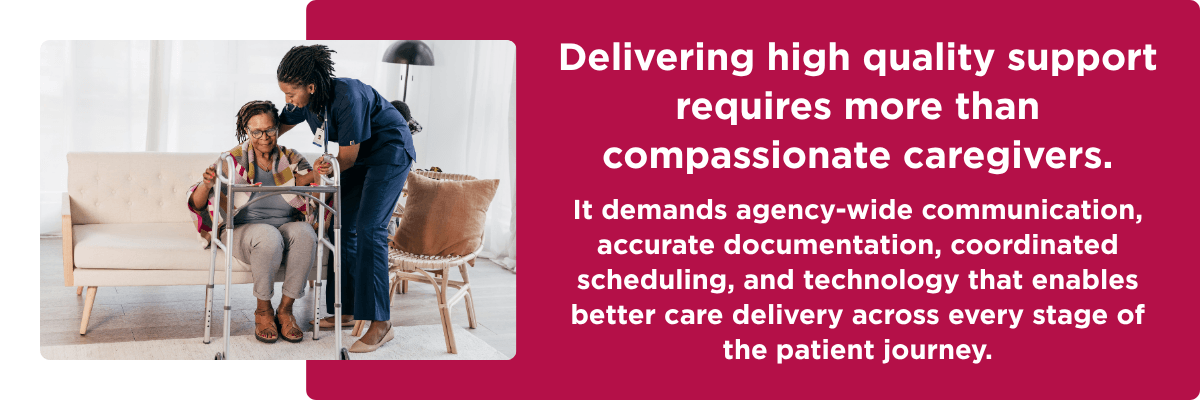
Delivering this level of support requires more than compassionate caregivers. It demands streamlined communication, accurate documentation, coordinated scheduling, and technology that enables better care delivery across every stage of the patient journey.
Recent data indicates that approximately 87% of adults aged 65 and older express a strong preference to remain in their current homes as they age, rather than moving to institutional care. As more senior women choose to age in place, home care agencies need tools that help caregivers deliver high-quality, patient-centered care while ensuring operational efficiency. This Women’s Health Awareness Month, it’s worth exploring how thoughtful care planning—and modern home care software solutions like CareVoyant—can help agencies improve outcomes for senior female patients.
Understanding the Unique Health Needs of Senior Women
According to national aging trends, senior women are more likely to live alone, increasing their reliance on home-based care services. These realities make personalized care planning especially important.
Senior women commonly face:
Multiple chronic health conditions
Higher risk of osteoporosis and falls
Greater likelihood of cognitive decline
Increased social isolation
Complex medication management needs
Post-hospitalization recovery challenges
For home care providers, understanding these challenges is the first step in delivering better care.
Key Health Concerns for Senior Women Receiving Home Care

1. Cardiovascular Health
Heart disease remains one of the leading health risks for women, yet symptoms often present differently than in men.
Senior female patients may experience:
Fatigue
Dizziness
Nausea
Shortness of breath
Jaw or upper back discomfort
Because these symptoms can be subtle, caregivers must remain observant and communicate changes promptly.
How Home Care Agencies Can Help
Agencies can support better cardiovascular outcomes by ensuring:
Routine vital sign monitoring
Accurate documentation of symptom changes
Prompt communication between caregivers and clinicians
Coordinated follow-up care after hospital discharge

With CareVoyant’s integrated clinical documentation tools, agencies can capture patient updates in real time, helping clinicians identify patterns and intervene quickly when concerns arise.
2. Osteoporosis, Mobility Challenges, and Fall Prevention
Women face significantly higher rates of osteoporosis due to hormonal changes associated with aging. This increases fracture risk and makes fall prevention a top priority.
Even a minor fall can lead to hospitalization, reduced independence, and long-term complications.
Best Practices for Fall Prevention
Home caregivers should focus on:
Environmental safety assessments
Monitoring mobility changes
Supporting strength and balance exercises
Ensuring proper use of assistive devices
Reviewing medications that may affect balance
Care planning becomes especially important here.
CareVoyant enables agencies to create individualized care plans that include mobility goals, fall prevention protocols, and caregiver instructions—all accessible within one centralized patient profile.
This ensures every member of the care team has visibility into the patient’s needs.
3. Cognitive Health and Dementia Support
Women account for a large percentage of patients living with Alzheimer’s disease and other forms of dementia. Supporting cognitive health requires consistency, patience, and structured care coordination.
Common challenges include:
Memory loss
Confusion
Medication noncompliance
Wandering risk
Increased anxiety
Delivering Better Cognitive Care at Home
Effective dementia care depends on:
Consistent routines
Clear caregiver communication
Detailed care instructions
Family involvement
Real-time documentation

CareVoyant supports this through streamlined scheduling, care plan visibility, and point-of-care documentation that helps agencies maintain consistency across caregivers and shifts. This continuity is essential for patients experiencing cognitive decline.
4. Chronic Disease Management
Many senior women manage several chronic conditions simultaneously, such as:
Diabetes
Arthritis
Hypertension
COPD
Kidney disease
Managing these conditions requires ongoing coordination between caregivers, nurses, physicians, and family members. Without efficient systems in place, important updates can be missed.
The Importance of Connected Care
Disconnected workflows often lead to:
Missed visits
Incomplete documentation
Delayed interventions
Communication breakdowns

CareVoyant’s all-in-one platform helps agencies centralize patient data, enabling better coordination between teams.
When caregivers document changes during visits, those updates become immediately available to clinical staff — supporting faster response times and better patient outcomes.
5. Mental Health and Social Isolation
Senior women are particularly vulnerable to loneliness and depression, especially after the loss of a spouse, changes in mobility, or reduced social engagement.
Mental health directly impacts physical health, medication adherence, and overall quality of life.
How Caregivers Can Support Emotional Wellness
Caregivers can help by:
Encouraging meaningful conversation
Promoting social interaction
Supporting hobbies and interests
Reporting concerns to supervisors

Technology can support this effort through consistent visit documentation and better communication across the care team. When emotional health concerns are documented and visible, agencies can proactively adjust care plans.
Why Personalized Care Planning Matters for Senior Women
No two patients age the same way.
A senior woman recovering from surgery will have very different care needs than someone managing progressive dementia or multiple chronic illnesses.
That’s why individualized care planning is essential.
Effective Care Plans Should Include
Medical history
Functional limitations
Medication schedules
Nutrition requirements
Safety protocols
Emotional wellness considerations
Family communication preferences
CareVoyant’s care planning capabilities allow agencies to build and update customized plans that evolve alongside patient needs.
This helps ensure caregivers always have accurate, actionable guidance.
Supporting Caregivers Who Care for Senior Women
Women’s Health Awareness Month is also a time to recognize caregivers.
Providing care for aging patients often requires emotional resilience, clinical attentiveness, and strong communication skills. Being a reliable resource for someone else 24/7 is rewarding, but can take a toll on caregivers over time.
Agencies can support their caregivers by:
Providing mental health support
Offering continuous training to build confidence and retain certifications
Facilitate communication about work-life balance
Recognize caregivers’ hard work and dedication
With proper support, caregivers can experience more fulfillment in both their work and personal lives.
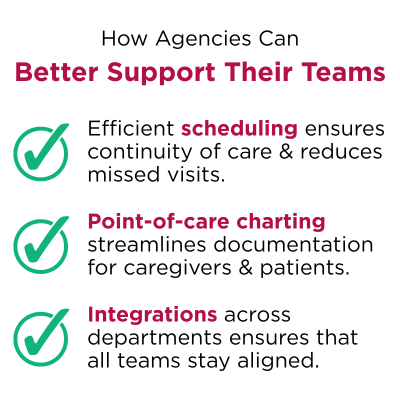
How Agencies Can Better Support Their Teams
Home care agencies can support every patient’s needs by investing in tools that reduce administrative chaos. That includes technology that simplifies:
Scheduling
Efficient scheduling ensures continuity of care and reduces missed visits.
CareVoyant’s scheduling tools help agencies match caregivers to patients based on qualifications, preferences, and availability.
This supports stronger caregiver-patient relationships.
Documentation
Complex documentation processes take time away from patient care.
CareVoyant’s point-of-care charting streamlines documentation so caregivers can record visit details quickly and accurately.
Communication
Clear communication helps teams respond faster to patient changes.
CareVoyant improves visibility across departments, ensuring clinical, operational, and billing teams stay aligned.
Building Better Care for Senior Women Starts with Better Systems
Women’s Health Awareness Month reminds us that aging female patients deserve care that is compassionate, proactive, and personalized.
For home care agencies, delivering that care requires the right combination of:
Skilled caregivers
Strong care coordination
Personalized planning
Efficient technology
CareVoyant helps agencies bring all these elements together. By streamlining operations and supporting better patient visibility, CareVoyant empowers agencies to provide the thoughtful, connected care senior women need to thrive at home.
Final Thoughts
Senior women represent a growing and important segment of home care patients. Their care needs are often complex, evolving, and deeply personal.
This Women’s Health Awareness Month, home care agencies have an opportunity to reflect on how they support these patients—and whether their systems truly enable the highest standard of care.
With the right software in place, agencies can improve coordination, strengthen caregiver support, and deliver better outcomes for aging women.
CareVoyant is committed to helping home care organizations deliver smarter, more connected care for every patient, every visit, and every stage of aging.
FAQ: Women’s Health Awareness Month and Home Care
-
Senior women face unique health risks that require personalized monitoring, preventive care, and coordinated support.
-
Common needs include chronic disease management, fall prevention, medication support, cognitive care, and emotional wellness support.
-
Integrated home care software improves communication, care planning, documentation, and service coordination.
-
CareVoyant helps agencies deliver personalized care through unified records, care planning tools, scheduling optimization, and real-time documentation.
-
Because every patient has different health needs, preferences, and risks. Customized care plans improve both safety and outcomes.
About CareVoyant
CareVoyant is a leading provider of cloud-based integrated enterprise-scale home health care software that can support all home-based services under ONE Software, ONE Patient, and ONE Employee, making it a Single System of Record. We support all home based services, including Home Care, Private Duty Nursing, Private Duty Non-Medical, Home and Community Based Services (HCBS), Home Health, Pediatric Home Care, and Outpatient Therapy at Home.
CareVoyant functions – Intake, Authorization Management, Scheduling, Clinical with Mobile options, eMAR/eTAR, Electronic Visit Verification (EVV), Billing/AR, Secure Messaging, Notification, Reporting, and Dashboards – streamline workflow, meet regulatory requirements, improve quality of care, optimize reimbursement, improve operational efficiency and agency bottom line.
For more information, please visit CareVoyant.com or call us at 1-888-463-6797.
Request for Information
To learn more about CareVoyant Software and how we improve the operational efficiency of Home Healthcare Agencies, contact us:
