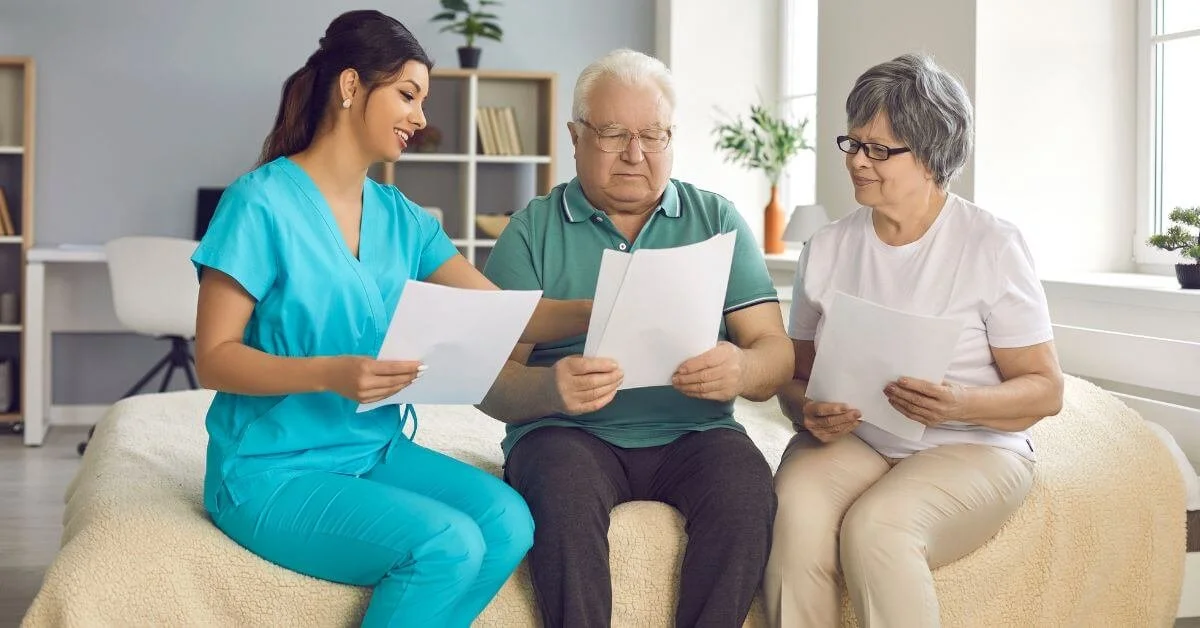

Explore how home care agencies can nurture meaningful partnerships with family caregivers and use CareVoyant’s platform to bring trust into everyday care.

The software platform will play a critical role in helping Home Health Agencies to implement OASIS-E1 changes. Agencies should check with their software vendors to understand their plans to accommodate OASIS-E1, make sure their plan will meet the requirements, and adjust their process accordingly.
This blog reviews the functions needed to support your transition to OASIS-E1.
Efficient care team coordination can relieve some of these challenges. Using separate communication tools can lead to poor communication between caregivers, clinicians, administrative staff, physicians, and patients. If messaging, eFax, and charting tools are provided through disparate means, communication becomes inefficient and there is more risk of creating HIPAA-compliance issues and information silos.
This blog will review communication inefficiencies that many Home Health Care Agencies experience and suggest seven solutions to enhance care team communication and improve quality of care.
Documenting care from memory or using the notes taken at the patient's home even after a few hours may lead to incomplete documentation due to decreased memory retention. With all the responsibilities put on clinicians and caregivers – Multiple Patient Visits, Communication with physicians and other team members, etc. – retention of learned information will decline during the first 24 hours. Home Health Care Agencies should strongly encourage clinicians to document at the patient's home and provide the tools necessary to make it easy and intuitive.
Home healthcare agencies should leverage technology and home healthcare software to overcome their challenges. Automation and Artificial Intelligence will empower home health care agencies to do more with less, improve operational efficiency and bottom line, and grow.
This blog will discuss the definitions of automation and artificial Intelligence, their differences, and how these technologies will impact the home healthcare industry.