

Intake bottlenecks slow referrals into active care, cost revenue, and delay treatment, and federal guidelines call for home health care to start within two days of discharge. CareVoyant centralizes referrals, automates eligibility and authorization checks, digitizes forms, and connects intake, clinical, and scheduling teams on one platform to turn referrals into care faster.
Introduction
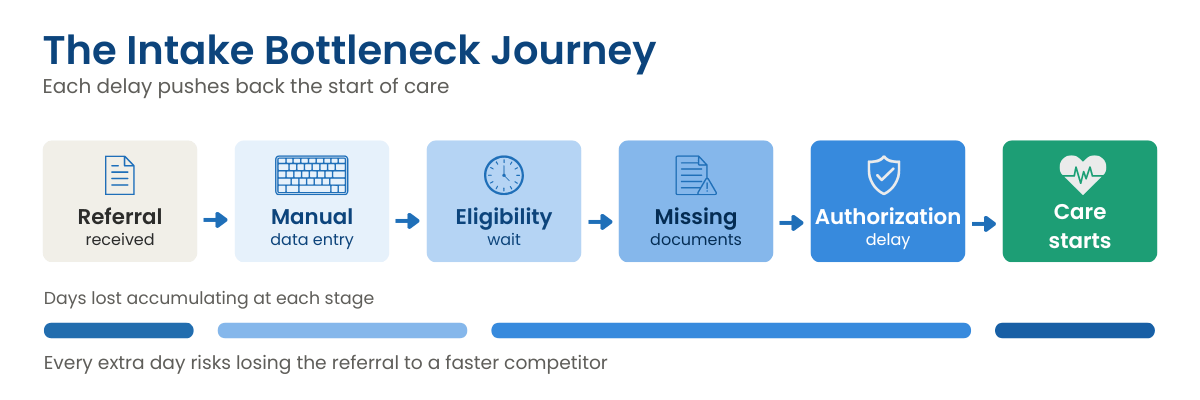
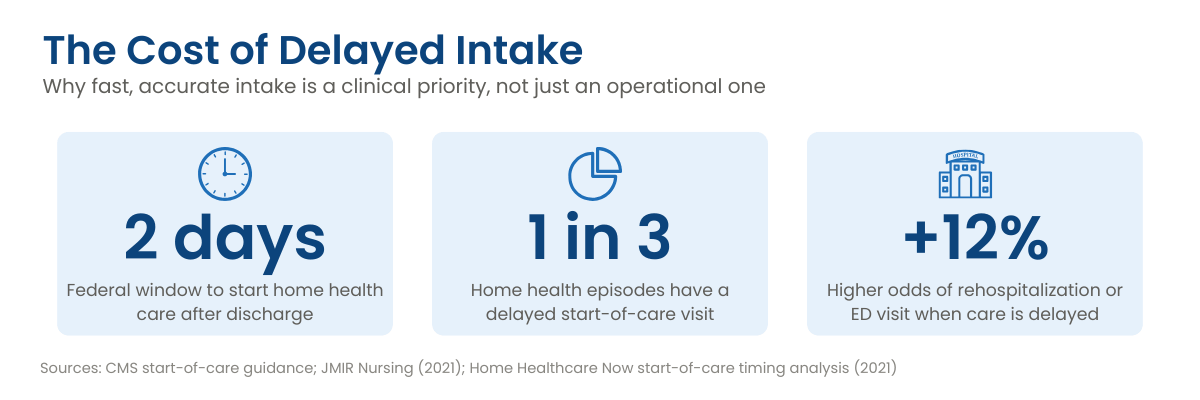
In home care, intake bottlenecks happen when delays or inefficiencies slow the process of turning referrals into active patients. They often trace back to manual paperwork, slow Medicaid or insurance eligibility checks, or gaps in communication between departments. The result is frustrated patients, strained caregiver schedules, and delayed revenue. Every extra day spent chasing documents or confirming coverage risks losing referrals to faster competitors and weakens the quality of care. Timing carries clinical weight too: federal guidelines require home health care to begin within two days of hospital discharge, and research on Medicare beneficiaries links delayed starts to higher rehospitalization odds. CareVoyant streamlines the entire intake process by automating tasks, centralizing data, and speeding verification, so agencies can work smarter, not harder, and deliver timely care while protecting their bottom line.
Understanding Intake Bottlenecks in Home Care
Intake bottlenecks in home care occur when the process of moving a referral to active care is slowed by preventable obstacles. Studies of home health agencies show that about one in three episodes has a delayed start-of-care visit, and researchers point to intake and scheduling procedures as a leading factor worth fixing. A data science study published in JMIR Nursing found that improving patient intake procedures and scheduling systems was among the top interventions for reducing these delays.
Causes of Intake Delays
Several factors contribute to intake inefficiencies. Manual data entry and duplicated effort force staff to input the same information several times, raising the risk of errors. Waiting on insurance or Medicaid eligibility verification can delay the start of care, especially when it runs through phone calls or faxes. A lack of standardized workflows means every intake gets handled differently, creating inconsistency and delays. Poor integration between referral sources and agency systems forces staff to move information by hand, wasting time and resources.
Signs You Have an Intake Problem
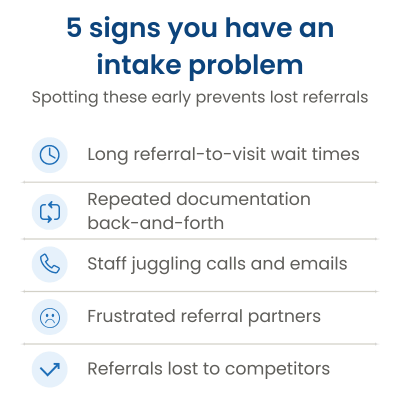
Common red flags include long wait times from referral to first visit, repeated back-and-forth over missing documentation, and intake staff constantly juggling phone calls and emails. Patients or referral partners may voice frustration over slow onboarding and start looking elsewhere. Spotting these signs early is essential for preventing lost opportunities, ensuring timely care, and keeping referral relationships strong. Addressing them with the right technology and process improvements turns intake from a bottleneck into a competitive advantage.
The Business and Clinical Impact of Intake Bottlenecks
Intake bottlenecks are more than administrative headaches. They affect both the financial health of a home care agency and the well-being of patients. The clinical stakes are measurable: one analysis of start-of-care timing found that delayed episodes carried roughly 12 percent higher odds of rehospitalization or an emergency department visit compared with timely care.
Lost Referrals to Faster Competitors
In a competitive market, speed matters. If your intake process is slower than another agency's, referral sources may pick a provider who can start care sooner. Each lost referral is missed revenue and one fewer chance to grow your client base.
Delayed Start of Care Affecting Patient Health Outcomes
When intake delays push back the start of care, patients can go without essential services during a critical window. Federal guidance and clinical research tie later start-of-care visits to deteriorating health, higher hospitalization risk, and lower satisfaction with an agency's services.
Strain on Caregiver Scheduling and Resource Allocation
Slow intake creates a ripple effect in scheduling. Last-minute approvals lead to rushed caregiver assignments, double bookings, or idle hours when visits are delayed or canceled. This disrupts workforce planning and frustrates staff.
Increased Administrative Costs and Staff Burnout
Repeated follow-ups, manual data entry, and constant backtracking drive up administrative time and cost. Overloaded staff working under steady pressure are more likely to burn out, which fuels turnover and the cost of training replacements.
Intake bottlenecks weaken both clinical outcomes and operational performance. Agencies that remove these barriers protect their bottom line and deliver faster, more consistent, higher-quality care.
How CareVoyant Solves Intake Bottlenecks
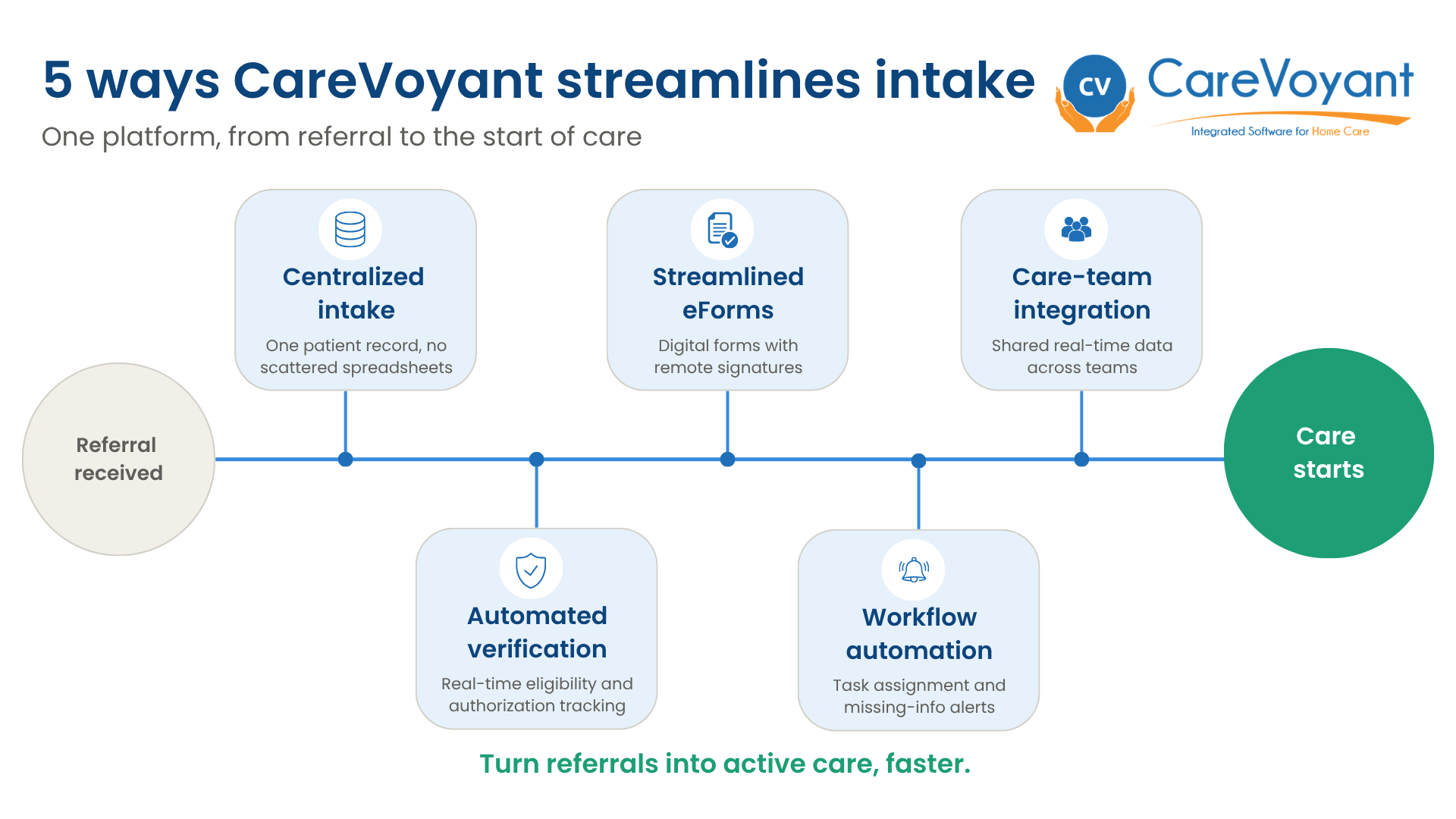
CareVoyant's integrated home care software is built to remove the delays, duplication, and inefficiencies that slow patient onboarding. By unifying intake workflows on a single platform, CareVoyant helps agencies work smarter, not harder, and streamline every step from referral to the start of care.

Centralized Referral and Intake Management
CareVoyant's intake and admissions functionality captures all patient data in one place, removing the need for scattered spreadsheets or disconnected systems. It establishes a single patient record for one or more home-based services and consolidates authorization, scheduling, clinical, and financial information under one patient. This centralized approach to patient access gives agencies a clear, real-time picture of every incoming case so they can respond quickly and confidently.

Automated Eligibility and Authorization Verification
Manual payer verification can stall intake for days. CareVoyant helps teams verify Medicaid eligibility quickly and pairs real-time checks with integrated authorization and plan of care management that tracks authorized services and times for each patient. This replaces slow, error-prone phone calls and faxes, cuts approval times, and lets agencies begin care sooner without sacrificing compliance.

Streamlined Documentation and eForms
CareVoyant Electronic Forms replace paper-based and static PDF forms with customizable digital documentation, reducing errors and making sure every required field is completed before submission. Digital signatures let patients and caregivers finalize paperwork remotely, removing in-person follow-up and speeding onboarding while keeping the process compliant and patient-friendly.

Task Management and Workflow Automation
CareVoyant's workflow tasks and alerts assign intake work to the right staff with clear deadlines, so nothing slips through the cracks. Automatic alerts flag missing or incomplete information before it delays the start of care and help managers spot recurring bottlenecks. Because intake feeds directly into billing, an effective intake process also strengthens the revenue cycle from the very first step.

Integration Across Care Teams
With CareVoyant, intake, clinical, and scheduling teams share the same real-time data, and built-in care coordination and communication eliminates the back-and-forth emails and phone calls that cause delays and rework. As soon as intake is complete, scheduling can assign caregivers by availability, location, and skill match, helping agencies start care faster and lift patient satisfaction.
Working Smarter, Not Harder with CareVoyant
By combining centralized data management, automated eligibility checks, streamlined documentation, workflow automation, and cross-team integration, CareVoyant helps agencies turn referrals into active cases with speed and accuracy, driving the kind of operational efficiency that shows up on the bottom line. That means:
✅Shorter referral-to-start timelines
✅Fewer lost opportunities to faster competitors
✅Better caregiver scheduling and utilization
✅Reduced administrative burden and burnout
✅Higher patient satisfaction and retention
In a competitive home care market, agencies that optimize intake gain a decisive edge. CareVoyant does not just speed up onboarding. It turns intake into a strategic asset that supports growth, compliance, and quality of care.
Conclusion
Intake bottlenecks drain time, raise costs, and push patients toward faster competitors. Because onboarding delays affect both operational efficiency and quality of care, intake is one of the most important processes to streamline. CareVoyant home care software helps agencies overcome these challenges by centralizing data, automating eligibility verification, streamlining documentation, and improving communication across teams. With a smoother, faster, more reliable intake process, agencies increase efficiency, improve patient satisfaction, and strengthen their competitive position. Schedule a CareVoyant demo today and see how it can help you onboard patients faster, boost satisfaction, and grow your home care agency.
Frequently Asked Questions (FAQs)
-
An intake bottleneck is any delay or inefficiency that slows the process of turning a referral into active care. Common causes include manual paperwork, slow Medicaid or insurance eligibility verification, missing documentation, and poor integration between referral sources and agency systems.
-
Federal guidelines require agencies to conduct a start-of-care visit within two days of hospital discharge, and within 48 hours of referral or the patient's return home. Research links delays beyond this window to higher rehospitalization and emergency department risk, which makes fast, accurate intake a clinical priority as well as a business one.
-
CareVoyant centralizes referrals and patient data in one record, validates eligibility in real time, tracks authorizations, digitizes forms with electronic signatures, and automates intake tasks and alerts. Intake, clinical, and scheduling teams share the same data, so care can begin as soon as intake is complete.
-
Yes. CareVoyant validates eligibility in real time and integrates authorization tracking with scheduling, clinical documentation, and billing. This replaces manual phone calls and faxes, reduces denied claims, and helps agencies stay compliant while starting care sooner.
-
It does. The revenue cycle starts at intake, so collecting timely, accurate information at referral reduces denied claims, shortens reimbursement time, and improves cash flow, while also freeing staff to do more with less.
About CareVoyant
CareVoyant is a leading provider of cloud-based integrated enterprise-scale home health care software that can support all home-based services under ONE Software, ONE Patient, and ONE Employee, making it a Single System of Record. We support all home based services, including Home Care, Private Duty Nursing, Private Duty Non-Medical, Home and Community Based Services (HCBS), Home Health, Pediatric Home Care, and Outpatient Therapy at Home.
CareVoyant functions – Intake, Authorization Management, Scheduling, Clinical with Mobile options, eMAR/eTAR, Electronic Visit Verification (EVV), Billing/AR, Secure Messaging, Notification, Reporting, and Dashboards – streamline workflow, meet regulatory requirements, improve quality of care, optimize reimbursement, improve operational efficiency and agency bottom line.
For more information, please visit CareVoyant.com or call us at 1-888-463-6797.
Request for Information
To learn more about CareVoyant Software and how we improve the operational efficiency of Home Healthcare Agencies, contact us:
